
What a Skill is
A Skill is a reusable set of instructions for a class of work. It can explain how to review a release, debug a failed Run, prepare a report, or follow another repeatable procedure. Use a Skill for how to do recurring work. Keep facts about the current task in its Chat, Issue, project, or Library. Keep the Agent’s long-term role in its Agent instructions.Example: release checks
After several releases, a team notices the same useful checklist in every review: verify package versions, test the installer, check release notes, and name a rollback point. The team turns the stable checklist into a Skill. The next release Agent can reuse that procedure instead of receiving a copied prompt. Review still decides whether the result is good.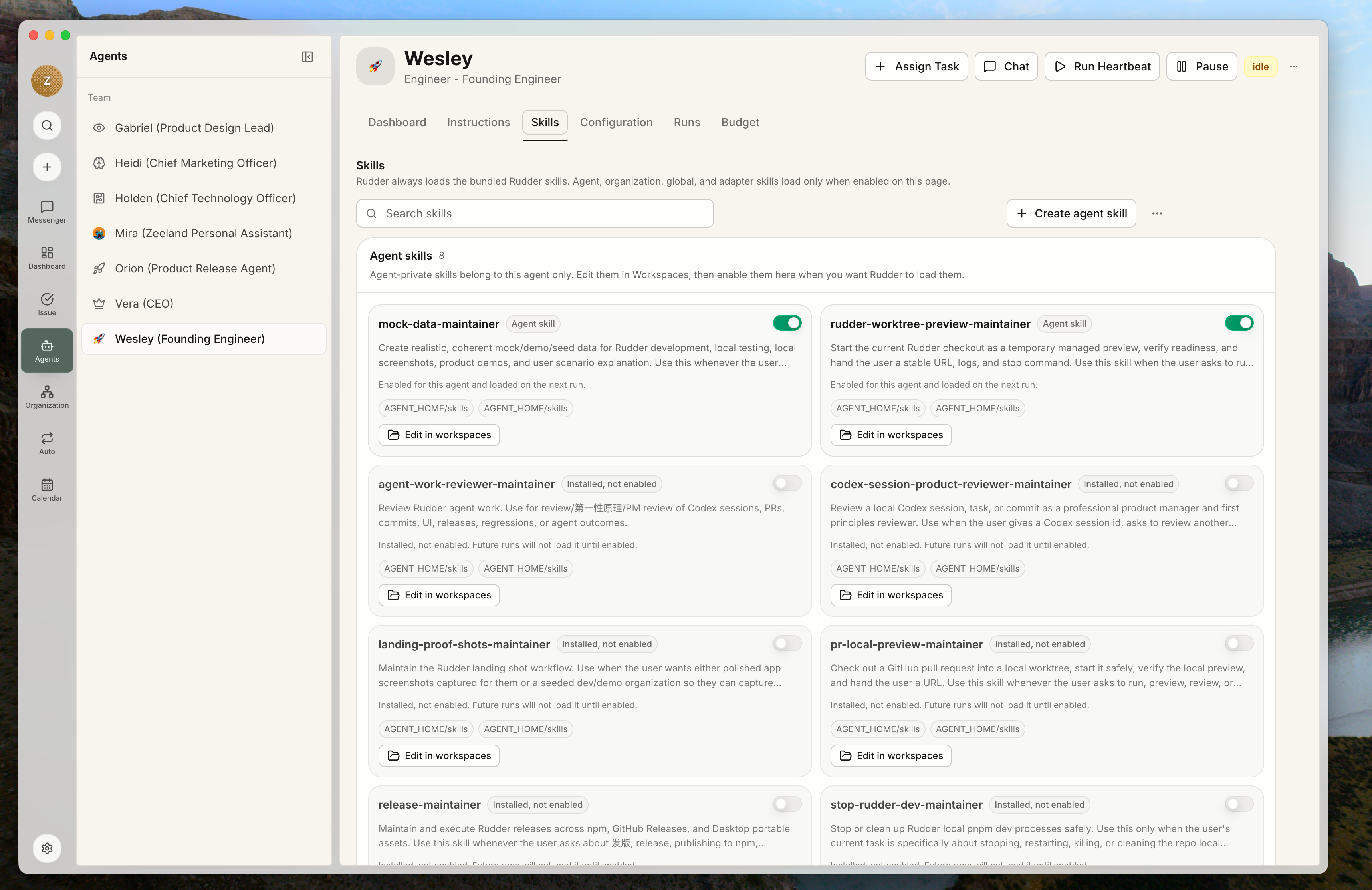
When to create one
Create a Skill when:- the same procedure has worked more than once
- its trigger and expected result are clear
- several future tasks or Agents will benefit
- someone can maintain it when the process changes